Archaeologists Find 4,000-Year-Old Jug Containing Seeds of Critically Endangered Flower
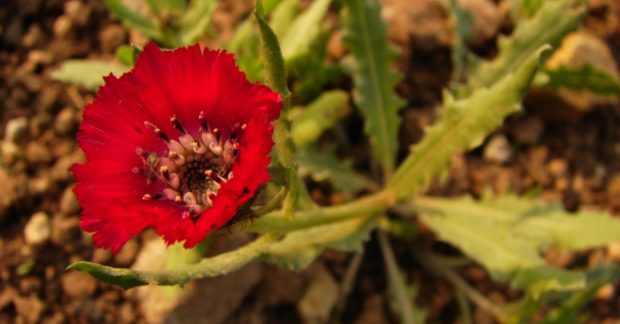
During excavations in Turkey, researchers discovered an ancient vessel holding seeds of a rare flower that grows exclusively in a single region today.
 🏙️City
Photo: UNIAN
Key points
- 4,000-year-old Hittite jug discovered in Turkey
- Vessel contained seeds of the rare flower of love
- Plant survival relies on timed agricultural plowing
- Local authorities have implemented protective conservation projects
Archaeological discoveries frequently bridge the gap between ancient history and modern ecological preservation. Recently, during excavations at the Külhöyük mound in Turkey's Gölbaşı district, specialists uncovered a remarkable artifact: an ancient ceramic vessel dating back approximately 4,000 years, containing preserved seeds of a critically endangered plant.
Ancient Discovery and Botanical Significance
The pottery piece was found inside a major structure at the site. Excavation leader Derya Yılmaz Tekin noted the significance of the find, which sheds light on ancient Anatolian heritage. Botanists identified the seeds as Centaurea tchihatcheffii, locally known as sevgi çiçeği or the "flower of love." Today, this annual plant faces severe extinction threats and grows naturally nowhere else on Earth outside the Gölbaşı region.
Conservation Efforts and Environmental Balance
Research indicates that the survival of the flower heavily depends on agricultural timing. Proper plowing schedules help the species regenerate and increase population density year after year. Local authorities have already launched conservation initiatives near Lake Mogan, establishing fenced protection areas, regulating agricultural practices, and reseeding suitable plots.
Such stories highlight the ongoing global effort to protect fragile ecosystems and rare biodiversity. For urban communities everywhere, including citizens in regional hubs, these discoveries serve as a reminder of the delicate balance between human activity and nature, reinforcing the value of environmental stewardship and local green space preservation.
Source UNIAN — unian.ua/curiosities/ridkisna-kvitka-turechchini-yaka-bilshe-nide-n… ↗
Read next
 🇺🇦Ukraine
Emergence of an Authoritarian Military Network: Cooperation Between Russia, China, Iran, and North Korea
Russia, China, Iran, and North Korea are deepening military ties, exchanging technology and expertise to bypass international sanctions.
 💼Economy
Currency Exchange Forecast: How Much Will the Dollar Cost in Ukraine by Late November
Experts have released a forecast for foreign currency rates in Ukraine until November 29, considering seasonal factors and the economic situation.
 🧠AI Analysis
Electricity Restored in Rivne Region After Russian Attack
Electricity has been restored in the Rivne region after a Russian attack left over 50 settlements without power.
 👥Society
Autumn Rose Care: Expert Tips for Gardeners
Experts explain why it is best to avoid radical rose pruning until stable frosts arrive.
 🇺🇦Ukraine
Estonia affirms Ukraine's right to self-defense following incident in the Gulf of Finland
Estonian Foreign Minister Margus Tsahkna stated that the strike on a Russian vessel is a consequence of Russian aggression and reaffirmed Ukraine's right to defend itself…
 🛡️Security
Elderly woman rescued from rubble in Dymer: death toll rises
Search and rescue operations continue in Dymer, Kyiv region, following a drone strike. Rescuers saved an 89-year-old woman, while the confirmed death toll has reached nin…