Student archaeologists uncover 2,000-year-old Roman treasures in Great Britain
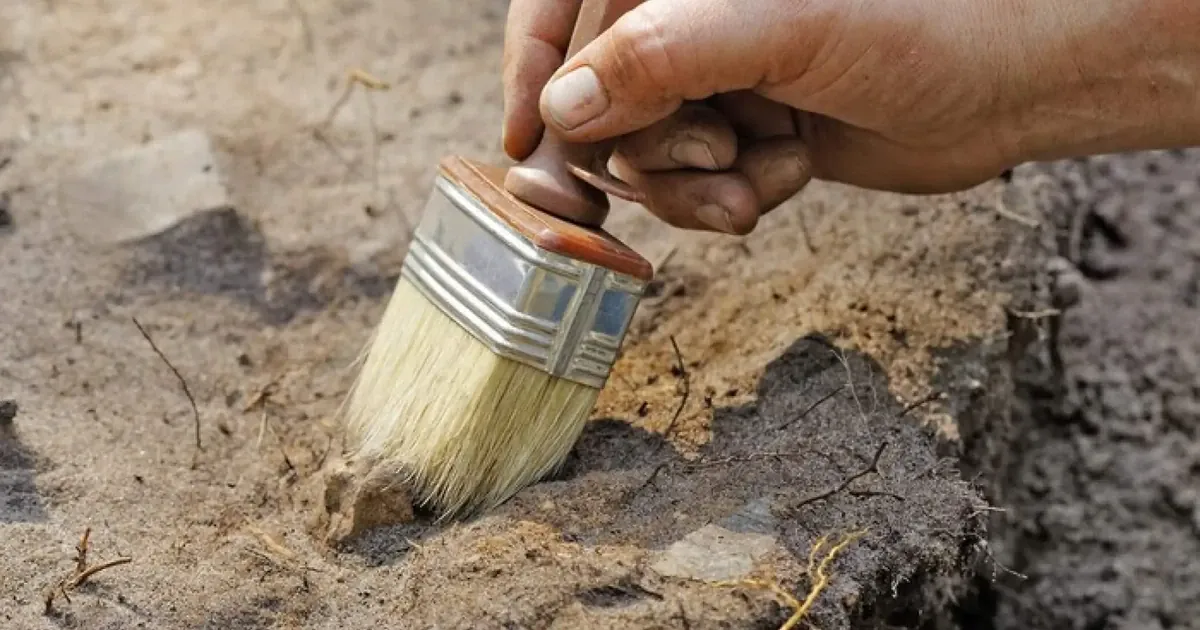
First-year students from Newcastle University discovered unique Roman artifacts, including a gold chain and a gemstone depicting Jupiter, during archaeological excavations near Hadrian's Wall.
 🎓Education
Photo: TSN
Key points
- Students discover 2,000-year-old Roman artifacts
- Finds made near Hadrian's Wall in Great Britain
- Discoveries include a gold chain and a Jupiter intaglio
- Excavations help scholars understand Roman border life
Field practice for first-year students at Newcastle University in the UK has yielded outstanding academic results. During archaeological excavations in Redesdale, northern England, students discovered a collection of valuable Roman-era artifacts dating back approximately two thousand years. A notable feature of this year's dig was that many of the unique finds were uncovered by newcomers during their very first days on site.
Unique jewelry and Roman-era artifacts
Among the most significant discoveries is an almost perfectly preserved fragment of a gold chain measuring about seven centimeters, crafted using the loop-in-loop technique. Student Eliza Zallu found the piece, characteristic of high-quality Roman jewelry, on her very first day of fieldwork. According to the student, such success at the start of her archaeological career came as a complete surprise.
In addition to the gold chain, the students excavated several other remarkable items. Shannon Wood discovered a piece of lead bearing a Latin inscription, while Megan Potter found a gilded military fitting. Toward the end of the project, participants Maisie Whatmough and Zoe Yuill recovered a carnelian intaglio featuring an intaglio carving of Jupiter, the supreme god of the Roman pantheon.
Historical significance and research context
The excavations in Redesdale take place near the historic Hadrian's Wall, which served as the northern defensive frontier of Roman Britain in antiquity. Newcastle University researchers have been studying the site for over thirty years, aiming to understand life in the borderlands.
Excavation leader Richard Carlton emphasizes that these artifacts, along with architectural remains, help reconstruct the daily lives of people from that era and the interactions between Romans and local communities. Such discoveries highlight the importance of hands-on training for history students.
Source TSN — tsn.ua/tsikavinki/pershokursnytsi-rozkopaly-skarby-vikom-2000-rokiv-shc… ↗
Read next
 🎭Culture & Sport
Ukrainian Boxer Sofia Turbinina Secures Bronze at U23 European Championship in Croatia
Ukrainian athlete Sofia Turbinina won a bronze medal at the Under-23 European Boxing Championship in the under 48 kg weight category during the tournament in Poreč, Croat…
 💼Economy
Labor Shortage in Ukraine: Why High Salaries Do Not Solve the Staffing Crisis
The Ukrainian labor market faces a severe shortage of blue-collar and technical professionals, where even salaries exceeding 60,000 hryvnias fail to quickly fill vacancie…
 💡Tech
Pentagon Restricts Military Contacts with Canada in Secret Directive
U.S. Defense Secretary Pete Hegseth has signed a classified memo limiting certain military interactions with Canada, adding to ongoing diplomatic tensions.
 🛡️Security
Another Russian Vessel Carrying Military Cargo Attacked by Drones off Libya's Coast
A Russian commercial vessel transporting military hardware has reportedly been struck by drones near the Libyan port of Benghazi.
 🎭Culture & Sport
Why Robins Constantly Visit Your Garden: Ornithologists Explain
Robins often accompany people during garden work, but this behavior is driven by the search for food rather than affection.
 🩺Health
Just 150g a day: why fermented cabbage is beneficial for older adults
Dietitians highlight the health benefits of sauerkraut for older adults. Eating just 150 grams daily can boost immunity and significantly improve gut health.