First 'Planimal' Cells Created: Scientists Combine Hamster and Algae DNA
An international research team led by the University of Tokyo has engineered animal-plant hybrid cells capable of retaining foreign DNA across more than 150 generations.
 💡Tech
Photo: TSN
Key points
- University of Tokyo researchers successfully fused Chinese hamster cells with red algae DNA.
- The foreign algal genome remained stable through more than 155 cellular divisions.
- Mammalian epigenetic defense mechanisms currently keep roughly 96% of the algal genes inactive.
An international research team led by scientists at the University of Tokyo has achieved a breakthrough in cellular engineering by fusing genetic material from a mammal and a plant. Researchers successfully integrated cells of the Chinese hamster with the single-celled red alga Cyanidioschyzon merolae, creating lab hybrids dubbed 'planimals'—a portmanteau of plant and animal.
Cellular Fusion and Long-Term Stability
To fuse the disparate cells, scientists utilized polyethylene glycol to bridge the cell membranes, a technique that proved roughly 800 times more effective than alternative approaches. In one resulting hamster cell line, around 16.3 million base pairs of algal DNA—virtually its entire nuclear genome—became firmly integrated.
The critical milestone was the hybrid's reproductive viability. The integrated algal genome persisted through cell division and was detected even after 155 generations, achieved without the constant artificial selection typically required in laboratories to maintain genetic modifications.
"We successfully created hybrid chromosomes containing genetic material from both algae and mammals, and demonstrated that this material can be stably transmitted to daughter cells during repeated divisions," explained lead researcher Professor Sachihiro Matsunaga.
Current Limitations and Future Horizons
Despite this genetic integration, the cells do not yet exhibit plant-like capabilities. Epigenetic defenses in the mammalian host silenced approximately 96% of the protein-coding algal genes, allowing the cells to maintain normal division while suppressing unfamiliar genetic instructions. Furthermore, these cells lack chloroplasts and cannot photosynthesize.
The next phase of research focuses on selectively activating dormant algal genes. If successful, scientists believe this could eventually enable mammalian cells to perform unique metabolic functions, such as processing carbon dioxide or generating oxygen using light.
Source TSN — tsn.ua/nauka_it/hibryd-roslyny-ta-tvaryny-vze-realnist-navishcho-vcheni… ↗
Read next
 🛡️Security
Lithuania rejects Russian accusations regarding the use of its airspace for drone attacks
The Lithuanian Ministry of Foreign Affairs has officially denied claims by Russian authorities regarding the country's alleged involvement in launching drones towards the…
 🏙️City
Interior trends: how to transform kitchen space in Kremenchuk apartments
Designers suggest moving away from bulky dining sets in favor of compact, café-style solutions.
 🛡️Security
Drone attack in Krasnodar: explosions and airport restrictions reported
A drone attack in the Russian city of Krasnodar on November 22 caused multiple explosions, smoke near a military facility, and temporary flight disruptions.
 🏛️Politics
Donald Trump comments on the resignation of press secretary Caroline Leavitt
President Donald Trump expressed regret over the departure of White House press secretary Caroline Leavitt, who left her position to focus on her family.
 🎭Culture & Sport
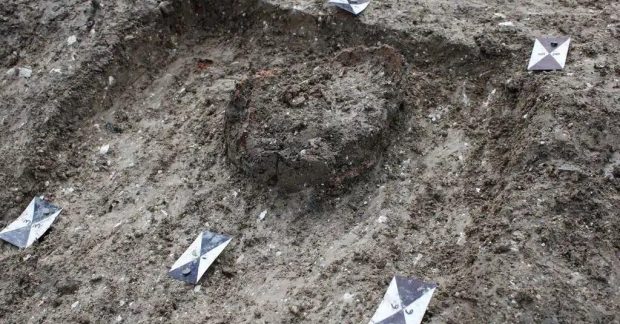
Unique Roman infant burial with birds discovered in Britain
Archaeologists in Buckinghamshire have unearthed a ceramic vessel containing the remains of an infant and birds, dating back to the 3rd-4th century AD.
 🏙️City
Donald Trump publicly reaffirms ties with Vladimir Putin on social media
US President Donald Trump posted a photo with the Russian leader, calling him his friend, despite international backlash.